
How to Eat Like a Thai
- Imm Thai Cuisine
- Oct 16, 2025
- 3 min read

So you’ve wandered into Imm Thai Cuisine, looked over the menu, and thought, “I want to do this right.” Good call. Eating like a Thai isn’t just about flavors — there’s etiquette, pacing, sharing, and a few little secret habits that make the experience extra delicious.
We love watching guests settle in, maybe a little unsure, and by the end of the meal they’re nodding, smiling, even licking their bowls. That sense of “I get this now” — that’s what we aim for.
Let’s go.

Think “Family Style,” Not “Just Yours”
In Thailand, meals are meant to be shared. When you see a table full of dishes, don’t think “I need to pick my one thing.” Think “I’m going to taste a bit of everything.”
So when you dine with us, order a few dishes and place them in the center. Start with a scoop of rice (or a bit of sticky rice), then try something from each bowl. It’s a lot more fun that way.
Oh — and a tip: Thais avoid wasting food. If you pile up too much on your plate and don’t finish it, people will feel a bit sad (and maybe we will, too). So take small amounts at first, then come back for seconds.
Rice Is The Center of Your Dinner Universe
If Thai food were a movie, rice would be the lead actor. Every dish is built around it. In fact, eating in Thai is kin khao, which literally means “eat rice.”
You’ll see that your plate will mostly be rice (or sometimes sticky rice) with small servings of curries, stir-fries, or soups around the edges. Use rice as your “canvas” — you’ll scoop, mix, and balance flavors with it.
Use the Right Tools (Yes, There Are Rules)
If you thought chopsticks were universal in Asia — surprise — they’re not for everything in Thailand. In most Thai settings, the spoon is king. The fork is there to help push food onto the spoon. Knives? You’ll rarely see one at the table.So:
Hold the spoon in your right hand.
Use the fork in your left to push food onto the spoon.
If a piece of food is too large? Just cut it with the edge of your spoon — totally acceptable.
Use chopsticks only if you’re eating noodles (but even then, you might find a fork more useful).
This approach keeps things clean, simple, and efficient — plus, it’s kind of meditative once you get the hang of it.
Balance Is Everything
Thai cooking is like a tightrope act: you’re always balancing sweet, sour, salty, and spicy. Every dish you order should contribute something to that balance.
When you taste something — say, our Chicken Green Curry — you’ll notice coconut creaminess (sweet), a bit of lime or kaffir leaf brightness (sour), fish sauce or soy sauce (salty), and chili (spicy). No one element should dominate too much — that’s what makes Thai food sing.
If something is too spicy for you, a little rice, a cold drink, or a bite of something creamy helps mellow it out.
Pace Yourself — Eat Slowly, Enjoy Deeply
In Thai culture, meals are not rushed. You’re meant to eat slowly, savor, chat, and let the flavors unfold. If you shovel everything down too fast, you miss the subtle shifts of flavors — that little tingle of chile, then the hint of lime, then the sweetness.
So relax. Taste each bite. Let the herbs, the aromatics, the textures surprise you.
Don’t Be Afraid to Mix & Match
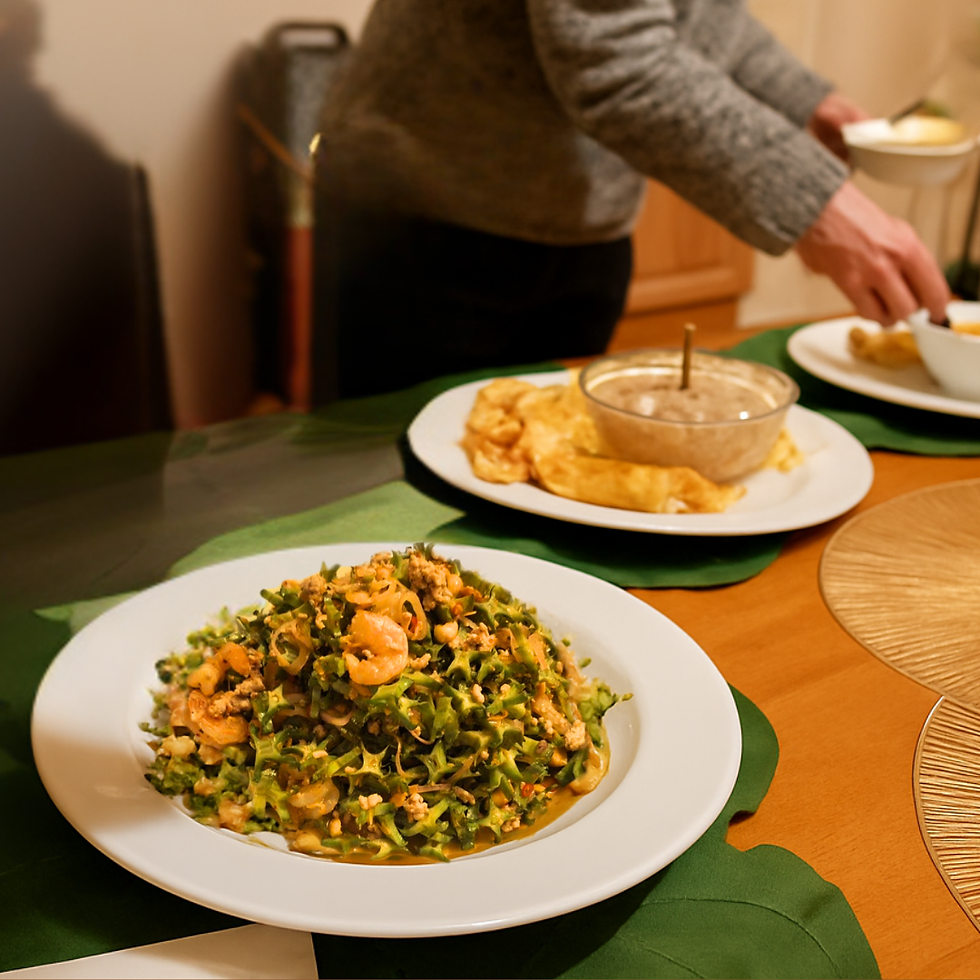
In Thailand, there’s no such thing as “wrong” combinations. Eat a sip of Tom Yum Shrimp Soup between bites of Stir-Fried Glass Noodles. Let your palate wander. Try Wing Bean Salad for crunch, Massaman Beef Curry for depth, Coconut Dip with Crackers as a playful side — and see what your tongue likes best.
Mixing flavors, textures, temperatures — it’s all part of the fun.

Comments